

Are Stratco Cooldek Insulated Patio Roofs Worth It in Melbourne?
When homeowners start planning a new patio, one of the first decisions is usually the type of roof.
For many of our Melbourne patio projects, the conversation eventually comes around to Stratco Cooldek - an insulated roofing system that combines the roof, insulation and finished ceiling surface into one panel.
But Cooldek is a more premium roofing option than a conventional single-skin patio roof, which raises an obvious question:
Is a Stratco Cooldek patio actually worth the extra investment?
In our experience, the answer depends less on simply choosing the more expensive product and more on how you intend to use the outdoor space.
If you're mainly looking for weather protection over a smaller outdoor area, Cooldek may not always be necessary.
But if you're trying to create an outdoor room that becomes a genuine extension of your home - somewhere the family can entertain, relax and spend time throughout the year - an insulated roof can make a significant difference.
If you're still deciding between different patio roofing systems, you can also read our guide to Stratco Cooldek vs Outback Flat Patio: Which Is Better for Your Home?
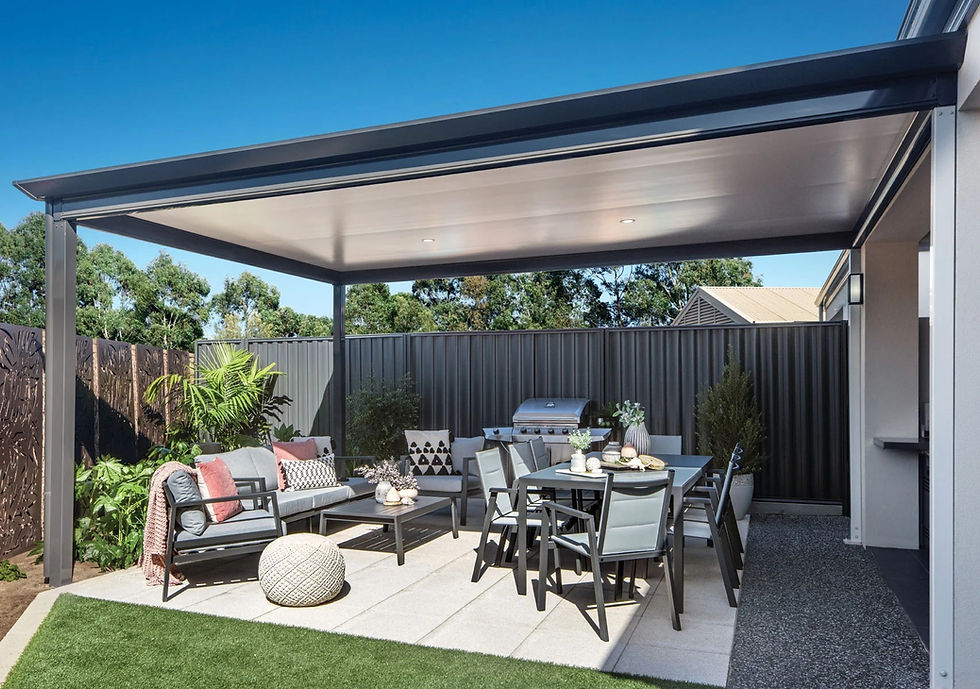
What Is a Stratco Cooldek Insulated Patio Roof?
Unlike conventional single-skin patio roofing, Stratco Cooldek is an insulated roofing panel designed specifically for outdoor living areas.
The panel combines the external roofing surface, an insulated core and a finished underside that creates a clean ceiling appearance beneath the patio.
For homeowners trying to create something that feels more like an outdoor room rather than simply putting a roof over an area, that's one of Cooldek's biggest advantages.
Cooldek also provides a practical foundation for integrating features such as lighting and ceiling fans into the overall patio design.
You can explore the wider range of Stratco patios in Melbourne available through Livin Renovations.
The Question We Ask Before Recommending Cooldek
When we're discussing a patio with a homeowner, one of the most important questions we ask is:
What is the main reason you're building the outdoor area?
Are you primarily looking for:
Protection from rain?
Shade during summer?
Somewhere to put an outdoor table and BBQ?
A dedicated entertaining area?
An extension of the living or dining area?
Somewhere the family can use throughout the year?
A space that might eventually be enclosed with outdoor blinds, acrylic panels or glass doors?
The answer usually tells us much more about whether Cooldek is worth considering than simply looking at the size of the patio.
If the objective is to create a genuine outdoor living space, Cooldek is often one of the first roofing systems we'll discuss.
Does an Insulated Patio Roof Make a Difference in Melbourne?
Melbourne weather can change considerably throughout the year.
We can experience hot summer afternoons, cold winter mornings, rain and rapidly changing conditions - sometimes within the same day.
A conventional metal patio roof provides very good shade and weather protection, but the roof itself is not insulated.
Cooldek introduces an insulated layer between the external roof surface and the finished ceiling underneath.
That doesn't turn an open patio into an insulated indoor room - it is still an outdoor structure - but it can reduce the transfer of heat through the roof and help create a more comfortable environment underneath.
Stratco publishes different thermal ratings depending on Cooldek panel thickness, with thermal resistance increasing as panel thickness increases.
For a patio intended for regular family living and entertaining, that becomes considerably more valuable than it would for a small area used occasionally.
What About a West-Facing Patio?
Orientation is something homeowners sometimes overlook when choosing their patio roof.
A west-facing outdoor area can receive significant afternoon sun during Melbourne's warmer months.
Even though the patio roof creates shade underneath, the external roof surface is still exposed to solar heat.
This is one situation where an insulated roofing system can become particularly attractive.
However, roof insulation is only one part of the design.
Low afternoon sun can still enter through the open sides of the patio, so orientation, outdoor blinds, screening, neighbouring buildings and landscaping can all influence how comfortable the finished area feels.
That's why we prefer to look at the whole outdoor space, rather than simply selecting a roof product in isolation.

A Cleaner Ceiling for Fans, Lighting and Heating
This is one of the practical reasons we often recommend Cooldek for larger entertaining areas.
Homeowners increasingly want their patio to include features such as:
LED downlights
Ceiling fans
Outdoor heating
Speakers
Additional electrical points
Televisions
Outdoor kitchens
Cooldek provides a more substantial finished roof system and a clean ceiling-like appearance underneath.
It is also designed with provision for concealing electrical wiring for features such as lights and fans.
With a conventional Outback Flat roof, many of these features can still be incorporated, but depending on the design, additional framing may be required.
That can introduce more visible structure underneath the patio.
If you're already planning fans, heating and integrated lighting, it's worth discussing those requirements before the patio is designed and ordered rather than trying to retrofit everything later.
Fans, heaters and other suspended items still require appropriate structural support and fixing methods for the individual product and patio design.
Is Cooldek Better If You Plan to Add Outdoor Blinds?
This is another question we discuss during the initial consultation.
You may want a completely open patio today, but what about in three or five years?
Some homeowners eventually add:
Outdoor blinds
Screens
Acrylic panels
Glass doors
Heating
Additional lighting
If you're already thinking about making the space more protected in the future, starting with an insulated roof can make a lot of sense from a comfort perspective.
But there is an important structural consideration.
You shouldn't assume that a standard open patio can simply be substantially enclosed later without further assessment.
Adding blinds, screening or other enclosure can change the wind loads acting on the structure.
Stratco's engineering documentation includes specific designs for some Outback systems incorporating Ambient Blinds, which demonstrates why future enclosure should be considered during the original patio design rather than treated as an afterthought.
If future enclosure is part of your plans, tell your patio builder before the structure is designed.
Is Cooldek Quieter When It Rains?
Rain noise is another reason homeowners consider insulated roofing.
Anyone who has stood underneath a single-skin metal roof during heavy Melbourne rain knows that it can become quite loud.
The insulated construction of Cooldek helps reduce the sharper drumming effect associated with rain hitting conventional single-skin metal roofing.
That can be particularly valuable if the patio is located directly outside a:
Living room
Dining area
Family room
Bedroom
It doesn't make the patio soundproof, but for an outdoor entertaining area the difference in roof construction can contribute to a more comfortable environment during heavy rain.
Will a Cooldek Patio Make the House Darker?
One question I regularly hear from homeowners is:
“Will putting a patio over these windows make the house dark?”
It's a very important design consideration.
Covering an outdoor area can reduce daylight entering adjoining rooms regardless of which patio roof system you choose.
This becomes particularly important when the roof extends across:
Sliding doors
Living-room windows
Dining-room windows
Kitchen windows
Bedroom windows
That's why we consider natural light during the patio design.
Cooldek can incorporate Cool Light panels, allowing natural light through selected sections of the roof.
Where a patio extends across windows serving habitable areas, we can strategically position translucent panels to help maintain available daylight.
The underside colour also helps.
A light-coloured Cooldek ceiling such as Surfmist can reflect available daylight underneath the patio rather than creating a dark overhead surface.
The objective isn't simply to cover the maximum possible area.
The patio has to work with the existing house.

Cooldek 50 vs Cooldek 75 - Which One Do You Need?
Cooldek is available in different panel thicknesses, but selecting the appropriate panel isn't simply a matter of assuming:
“Thicker must be better.”
There are two things to consider.
Structural requirements
When we design a Stratco Cooldek patio, the panel specification forms part of the overall engineering design.
Factors can include:
Roof span
Patio dimensions
Attachment configuration
Wind classification
Beam and column arrangement
Roof layout
At Livin Renovations, we design our Stratco patios using Stratco's design software, which determines the appropriate structural configuration for the individual project.
Stratco's engineering span tables also specify minimum panel thicknesses for different designs and spans. Depending on the particular configuration, the engineering can require panels of 50 mm, 75 mm or greater thickness.
Thermal performance
Panel thickness also influences insulation performance.
A thicker insulated panel provides greater thermal resistance than a thinner panel.
So both structural requirements and thermal performance can form part of the final specification.
Rather than automatically choosing a thicker panel because it sounds better on paper, we specify the Cooldek system that suits the actual patio design and intended use.
Does Cooldek Allow Longer Spans?
Potentially - but this is another area where blanket statements can be misleading.
The allowable span of a Cooldek roof depends on several factors, including:
Panel thickness
Patio configuration
Wind classification
Beam arrangement
Column spacing
Attachment method
Stratco publishes dedicated engineering span tables for different attached and freestanding Cooldek arrangements.
In practice, we generally rely on the Stratco design system to determine the appropriate configuration for each property.
Achieving a larger span can sometimes help reduce unnecessary intermediate framing and create a cleaner-looking patio.
But the objective isn't simply to create the biggest possible span.
It's to design a structure that is properly engineered and visually appropriate for the home.
What About Roof Pitch?
Another useful characteristic of Cooldek Classic is its ability to work with relatively low roof pitches.
Stratco's engineering information specifies a minimum roof pitch of 1 degree for Cooldek Classic, while Cooldek CGI requires a greater minimum pitch.
Low-profile roofing can be particularly useful when designing patios around existing Melbourne homes where available attachment height underneath the eaves may be limited.
However, simply achieving a low pitch isn't enough.
Adequate roof fall, gutter position, drainage and the available attachment height all need to be considered to ensure rainwater drains correctly.
When Is Cooldek Probably Not Worth the Extra Investment?
This is important.
We don't recommend Cooldek for every patio.
Sometimes a conventional Stratco Outback Flat roof is exactly what the homeowner needs.
For example, if you're building a relatively small patio where:
The main objective is simply weather protection
Existing wall lighting is adequate
Ceiling fans aren't required
Heat strips aren't required
The area won't be substantially enclosed
The patio will only be used occasionally
Budget is an important consideration
then spending more on an insulated roof may not provide enough additional benefit.
A well-designed Outback Flat patio can still provide excellent protection from Melbourne's sun and rain and create a very attractive outdoor area.
That's why our starting question is normally:
How are you actually going to use the space?
rather than:
Which is the most expensive roof available?
Cooldek vs Outback Flat - Which Should You Choose?
For many homeowners, the final decision eventually comes down to these two Stratco roofing systems.
Broadly speaking:
Outback Flat can be an excellent choice where the priority is straightforward weather protection, a clean patio design and keeping the project more economical.
Cooldek becomes particularly attractive where you're creating a more substantial outdoor living environment with insulation, a finished ceiling and provision for features such as lighting, fans and heating.
We've covered the decision in much more detail in our guide:
Does a Cooldek Patio Cost More?
Generally, yes.
Cooldek is a more substantial insulated roofing system and will normally cost more than a comparable patio using conventional single-skin roofing.
However, roof choice is only one part of the overall project cost.
The final price can also be affected by:
Patio size
Span
Attachment method
Site access
Engineering
Building permits and approvals
Electrical work
Drainage
Existing fascia and roof condition
Rooflights
Custom detailing
That's why simply comparing the square-metre cost of two patios can be misleading.
We've covered this separately in:
So, Is a Stratco Cooldek Patio Worth It?
For the right project, we believe it is.
If you're simply building a small roof to keep the barbecue dry or provide shade over an occasional-use area, you may not need to spend the additional money on an insulated roof.
But if you're creating an outdoor entertaining area that will effectively become an extension of your home, Cooldek becomes much easier to justify.
We particularly recommend considering it where the project involves:
A primary family entertaining area
Regular year-round use
Strong afternoon sun exposure
Ceiling fans
Integrated LED lighting
Outdoor heating
Future outdoor blinds or screening
A cleaner ceiling appearance
Creating the feeling of another outdoor room
Ultimately:
The best patio isn't necessarily the most expensive patio.
It's the one designed around your home, your budget and how your family actually intends to use the space.
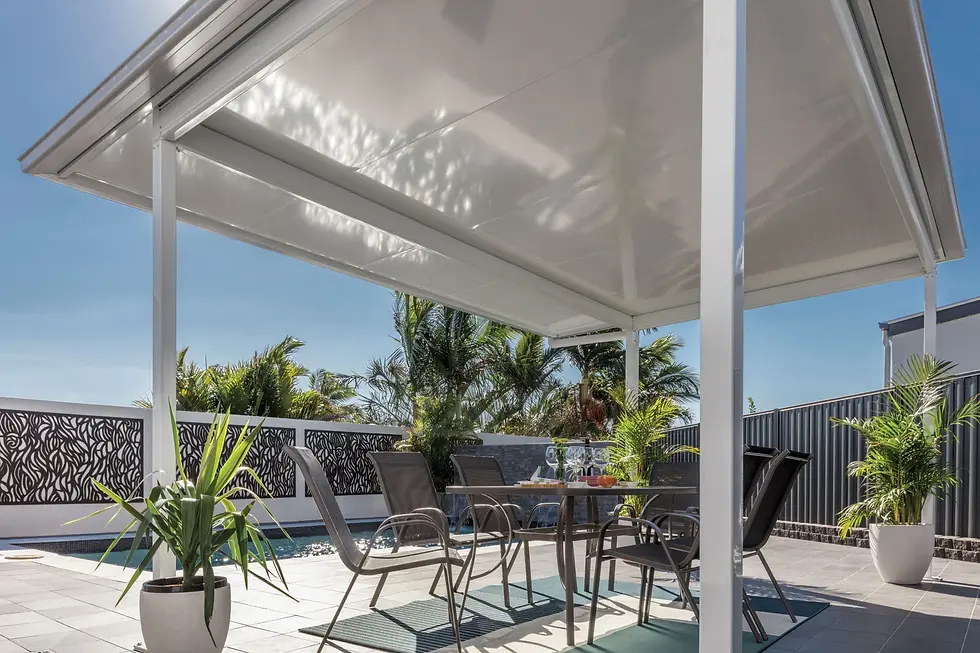
Planning a Stratco Cooldek Patio in Melbourne?
Livin Renovations designs and builds Stratco patios across Melbourne's south-east and the Mornington Peninsula.
As a registered builder and Authorised Stratco Dealer, we can assess your home, discuss how you intend to use the outdoor area and determine whether Cooldek, Outback Flat or another Stratco system is the better solution.
Rather than starting with the most expensive product, we prefer to start with what you're trying to create.
If you're considering a new patio, book a Patio Design Consultation and we can discuss the options for your home.


Comments